What to know about access issues for waste collection in SE19
Posted on 09/10/2026
If you have ever stood by the gate with a bin, a bulky item, or a full sack of garden waste and wondered why collection day suddenly became awkward, you are not alone. Access issues for waste collection in SE19 can turn a simple job into a frustrating one: tight roads, parked cars, narrow front paths, steps, shared entrances, locked gates, or just not enough space to turn a vehicle safely. In a place like SE19, where homes, flats, terraces, and mixed-use streets sit side by side, good planning makes a real difference.
This guide breaks down what access issues actually mean, why they matter, how the process usually works, and what you can do to keep collections moving smoothly. It also covers common mistakes, useful checks, and the practical best practice that tends to save time and stress. Truth be told, most problems are avoidable once you know what to look for.
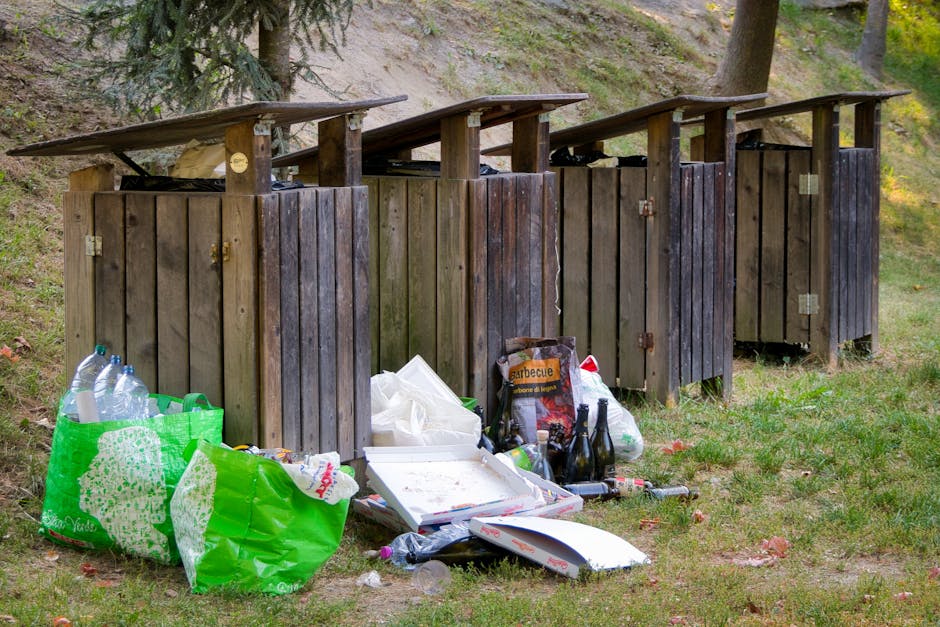
Why access issues for waste collection in SE19 matter
Access sounds like a simple word, but in waste collection it covers a lot: can the crew reach the waste safely, can the vehicle get near enough, and can the items be removed without delay or damage? If the answer is no, the whole collection can slow down. Sometimes it is only a few extra steps. Other times it is a hard stop.
In SE19, access matters because the local layout can be a bit of a patchwork. You get busy high streets, quiet side roads, terraced homes with narrow front areas, flats above shops, shared alleys, rear service routes, and streets where parked vehicles can make turning difficult. On a wet Tuesday morning, with bins out early and cars squeezing past, even small obstacles become awkward very quickly.
For residents and businesses, poor access often means one of three things: a missed collection, an added delay, or a need to move items to a more reachable point. For a waste team, it can also create safety concerns. Heavy lifting through tight spaces, carrying loads around obstacles, or reversing in cramped conditions is not something anyone wants to improvise.
The big takeaway? Good access planning is not about being fussy. It is about making collection practical, safe, and predictable. And yes, it saves everyone a headache.
How access issues for waste collection in SE19 works
Access issues are usually assessed before a collection, either from the details you give or by checking the site on arrival. A provider will typically want to know where the waste is located, how it will be reached, whether there are stairs or a long carry distance, and whether a vehicle can get close enough to load safely.
In straightforward cases, collection is simple: waste is left in an accessible spot, the crew arrives, loads it, and leaves. In more awkward setups, a few extra considerations come into play. For example, bulky furniture might need to come down a narrow staircase, builders' waste may be stored in a rear yard, or bins may be behind a locked gate. Sometimes access is fine for a person on foot but not for a lorry or van, which changes the whole approach.
This is where clear information matters. If the crew expects easy roadside loading but finds a basement flat with steep steps and no turning room, the job may need to be adapted. That can affect timing, labour, and in some cases whether the collection can be completed as planned. To be fair, that is not unusual. It happens all the time when details are vague.
If you are planning a broader clearance, it can help to look at the type of service as well as the access. A household move-out may suit house clearance in Crystal Palace, while larger mixed loads are often easier to organise through the wider services overview. The right setup depends on what is being removed and how easy it is to reach.
Key benefits and practical advantages
Sorting access issues properly does more than keep a collection on time. It improves the whole process in practical ways.
- Fewer delays: Clear instructions reduce back-and-forth on the day.
- Better safety: Safe access reduces the chance of strained lifting, trips, or vehicle manoeuvring problems.
- More accurate planning: If the route, stairs, gate codes, or parking limits are known, the team can plan the right vehicle and crew.
- Lower stress: You are not scrambling to move a car or unlock a gate while a team is waiting.
- Cleaner completion: Waste is more likely to be removed in one visit, rather than spread across multiple attempts.
There is also a quieter benefit that people sometimes overlook: better communication. Once access details are discussed early, the collection feels less transactional and more coordinated. That small shift makes a difference, especially for busy households, shop owners, or property managers juggling several moving parts at once.
If you have ever had a collection stall because a vehicle could not fit, you will know the relief of getting it right the first time. Simple, really. Not glamorous, but simple.
Who this is for and when it makes sense
Access planning is not just for large commercial jobs. It matters for anyone arranging waste removal in SE19 where the location is not perfectly straightforward.
Households
If you live in a flat, maisonette, basement property, or a home with a narrow side return, access questions are likely relevant. Furniture, mattresses, white goods, or bagged clutter often need a sensible route out of the property. Even something as basic as a locked communal door can slow things down.
Landlords and letting agents
End-of-tenancy clearances often involve a mix of old furniture, bin bags, and leftover items in awkward places. Landlords especially need to think about access if a property is in a terrace or behind a shared hallway. One missed detail and the handover becomes messier than it should be.
Shops and offices
Commercial properties in SE19 may have rear loading areas, restricted service times, or tight frontage space. A shop on a busy road might not allow easy stopping outside, while an office clearance may involve multiple floors, lifts, and fire-door routes. If a job needs planning, it is usually this kind.
Builders and property renovators
Builders' waste has its own headaches. Skips, rubble bags, plasterboard, and site debris often need to be moved through active workspaces with materials, tools, and tradespeople everywhere. In that setting, access is not just a convenience; it shapes how safe the site remains. For a more specialised approach, see builders' waste disposal in Crystal Palace.
Anyone arranging bulky or time-sensitive removal
If the waste is heavy, fragile, or tied to a deadline, access matters even more. Think probate clearances, shop refurbishments, garden makeovers, or same-day jobs where timing is tight. A quick plan now can prevent a long apology later.
Step-by-step guidance
If you want to avoid access problems, the safest move is to think like the crew would think. Walk the route. Look for pinch points. Ask yourself: can someone carry a sofa, a washing machine, or several bags out without having to weave through obstacles?
- Start at the waste location. Check exactly where the items are sitting. Front drive? Rear garden? Basement? Top floor? The starting point matters more than people think.
- Trace the exit route. Measure it with your eyes first. Are there steps, narrow doors, low branches, tight corners, or uneven paving? Little things add up fast.
- Look at vehicle access. Can a van or collection vehicle stop nearby without blocking traffic or causing a problem with neighbours? In some streets, the answer changes by the hour.
- Check gates, keys, codes, and timings. A locked courtyard with no key, or a service door that opens only between certain hours, can derail a neat plan.
- Flag parking limits early. If a permit, bay, or loading zone is needed, say so before the collection. Otherwise the crew may arrive and have nowhere legal to stop.
- Tell the provider about heavy or awkward items. Fridges, wardrobes, and awkward garden waste piles need different handling from light bagged waste.
- Share photos if possible. A few honest photos often explain more than a long description. Not glamorous, but very effective.
- Confirm who will prepare access on the day. Will someone open gates, move a car, or clear a hallway? If yes, make sure the timing is clear.
- Keep the route clear just before collection. A child's bike, recycling box, or loose boot at the bottom of the stairs can slow a team down.
- Review the plan if conditions change. Rain, roadworks, neighbour parking, or a locked communal entrance can all alter access at short notice.
That is the basic rhythm. Check, communicate, and keep the route realistic. Nothing fancy. Just sensible.
Expert tips for better results
Over time, the jobs that run most smoothly tend to share the same habits. They are not perfect, just well prepared.
Give the access picture, not just the waste list
People often describe the items and forget the setting. But the setting is half the job. A single sofa on the ground floor with no parking nearby may take more coordination than three bags in a driveway. The item matters, yes, but the route matters too.
Assume someone will need to carry it by hand
Even when a vehicle is nearby, waste may still need to be carried a short distance. That means door widths, corners, steps, and surface condition all count. Wet leaves on a path or a broken paving slab may seem minor, but they can become awkward in seconds.
Do not hide the difficult bit
If a gate is awkward, say so. If the only entrance is through a shared alley that sometimes gets blocked, say that too. In our experience, the jobs that go wrong usually went wrong because a small inconvenience was treated like a small detail. It wasn't.
Use time windows wisely
If access depends on parking availability or avoiding school-run traffic, choose a sensible window. Early morning can be easier for some streets, while other spots are calmer later on. There is no universal best time, just the time that works for your road and your load.
Keep neighbours in mind
That sounds obvious, but it is worth saying. If bins, cars, or shared entrances are part of the access route, a little courtesy goes a long way. A quick note or heads-up can prevent the sort of irritation that lingers for days. Nobody wants a collection to become a street debate.

Common mistakes to avoid
Most access problems are surprisingly ordinary. That is the funny thing. They are rarely dramatic; they are just missed details piling up.
- Only describing the waste, not the access: "Two sofas" tells you nothing about stairs, gates, or distance from the road.
- Forgetting about parking: A vehicle may not be able to stop where you expect, especially near busy local roads.
- Leaving items behind a locked entrance: If no one is available with keys or codes, the team may be blocked at the very first hurdle.
- Underestimating carrying distance: A long internal route can turn a quick job into a labour-heavy one.
- Not clearing the path: Bins, toys, pushchairs, tools, and loose debris can all get in the way.
- Assuming all flats are the same: One block may have a lift and loading bay; another may have stairs, a coded door, and no parking at all.
- Ignoring weather and surface conditions: Rain, mud, or icy steps can make access less safe even if the route looks fine on paper.
The biggest mistake is probably this: leaving the access discussion until the crew is already outside the property. That is when everyone starts guessing, and guessing is not a great collection strategy.
Tools, resources and recommendations
You do not need specialist equipment to think clearly about access, but a few simple tools help a lot.
- Phone photos or short videos: These are often the quickest way to show the route, steps, gates, and parking situation.
- Basic measurements: Door width, stair width, or the length of a rear path can help if items are bulky.
- Site notes: A written note about parking restrictions, gate codes, loading times, or restricted entrances can save a lot of repetition.
- Floor plans or property sketches: For offices, blocks, or multi-unit buildings, even a rough layout can improve planning.
- Neighbour or building manager contact: Useful if access is shared or permission may be needed on arrival.
If you are comparing service types, it is also worth looking at the provider's broader experience and approach. For example, a team that handles furniture disposal in Crystal Palace is likely to understand the realities of stairs, lifts, and awkward carrying angles, while someone arranging seasonal outdoor waste may find garden waste removal in Crystal Palace more relevant for back-garden access and side passage routes.
And if you want to understand how the business presents its approach more generally, the about us page and insurance and safety information can be helpful for confidence. Not exciting reading, maybe, but useful all the same.
Law, compliance, standards, or best practice
Access issues for waste collection are not usually about one single law or one strict national rule. In practice, they sit within broader expectations around safe working, responsible waste handling, and sensible site management. That means the details can vary depending on the property, the vehicle, the crew, and the type of waste involved.
From a best-practice perspective, there are a few principles worth keeping in mind. Waste should be handled safely. Routes should be clear enough to avoid unnecessary risk. Vehicles should not be placed where they create avoidable hazards. And if a site has restrictions, those restrictions should be communicated before collection rather than discovered under pressure.
For homes and shared buildings, this often means checking consent for communal access, respecting building rules, and keeping escape routes and shared hallways clear. For businesses, it may mean coordinating with building management or site staff so loading does not interrupt operations or create a safety issue. For building and refurbishment work, good access planning can also help with general site control, which is why many teams refer to their terms and conditions and privacy policy when clarifying how jobs are arranged and recorded.
There is a simple principle underneath all of this: if a route is awkward, make it explicit early. That one habit does a lot of heavy lifting, and no one has to pretend otherwise.
Options, methods, or comparison table
There is more than one way to handle access-sensitive waste collection. The right choice depends on how much waste there is, where it is stored, and how easy it is to reach.
| Method | Best for | Pros | Limitations |
|---|---|---|---|
| Curbside or roadside pickup | Simple, accessible loads near the street | Fast, straightforward, often low effort | Not suitable if parking or loading space is limited |
| Hand-carry from property | Flats, terraces, rear gardens, and internal clearances | Flexible and useful when vehicles cannot reach the waste directly | Needs clear routes and can take longer |
| Pre-arranged assisted collection | Bulky items or awkward access points | Helpful for stairs, gates, and heavier lifting | May require more detail in advance |
| Phased collection | Large clearances, refurbishments, or multiple loads | Reduces congestion and can work around tight access | Requires more planning and coordination |
If you are unsure which method fits your property, the most sensible clue is usually the route itself. If a van can get close and the waste is already near the front, a simple pickup may be enough. If the waste is tucked away in a basement or behind a shared courtyard, a hand-carry or assisted plan is often more realistic.
Case study or real-world example
Picture a typical SE19 scenario: a second-floor flat above a shop, a worn sofa, a broken desk, and several black sacks of general clutter. On paper, it sounds simple. In reality, the stairwell is narrow, the front entrance opens onto a busy road, and there is no legal stopping space right outside. The waste is there, but access is the issue.
In a case like that, the smoothest approach is usually to confirm the stair route, check whether the building has a rear exit, identify where a vehicle can safely wait, and make sure someone can unlock the door at the agreed time. If the load includes heavier items, it may also help to separate them so they can be carried in the safest order rather than all at once.
What makes the difference is rarely a complicated trick. It is usually the boring bit: a clear description, a couple of photos, and a realistic plan. By the time the team arrives, everyone knows which door to use and where the vehicle can stand. Nothing dramatic. No scramble. No standing in the street muttering, "it should be here somewhere."
That kind of job tends to finish faster and with less disruption for everyone nearby. Which, honestly, is the whole point.
Practical checklist
Use this checklist before booking or on the day of collection.
- Have I described exactly where the waste is located?
- Have I mentioned stairs, lifts, steps, or uneven surfaces?
- Is there a gate, lock, code, or key needed for entry?
- Can a vehicle legally and safely stop near the property?
- Are there parking restrictions, time limits, or permit issues?
- Have I shared photos if the route is awkward?
- Do I know whether the waste must be carried by hand for part of the route?
- Have I cleared hallways, paths, and doorways as much as possible?
- Has the building manager, neighbour, or tenant been informed if needed?
- Are any bulky items likely to need extra handling?
If you can tick most of those off, you are already ahead of the curve. Not perfect, maybe, but definitely prepared.
Conclusion
Access issues for waste collection in SE19 are really about one thing: making sure the waste can be reached, moved, and loaded without unnecessary stress. Whether you are dealing with a flat, a shop, a terrace, a garden, or a full property clearance, the same principle applies. Know the route. Flag the problems early. Keep the plan practical.
When access is handled well, collections feel calmer, safer, and more efficient. When it is ignored, even a small job can become messy. The good news is that most access problems are easy to manage once you know what to check. A few honest details, a little planning, and the collection usually takes care of itself.
And that is often what people need most: not a perfect process, just a smooth one. One less thing to worry about on a busy day.
Get a free quote today and see how much you can save.

 Tipper Van - Waste Collection and Basement Waste Clearance Prices in Crystal Palace, SE19
 Luton Van - Waste Collection and Basement Waste Clearance Prices in Crystal Palace, SE19


